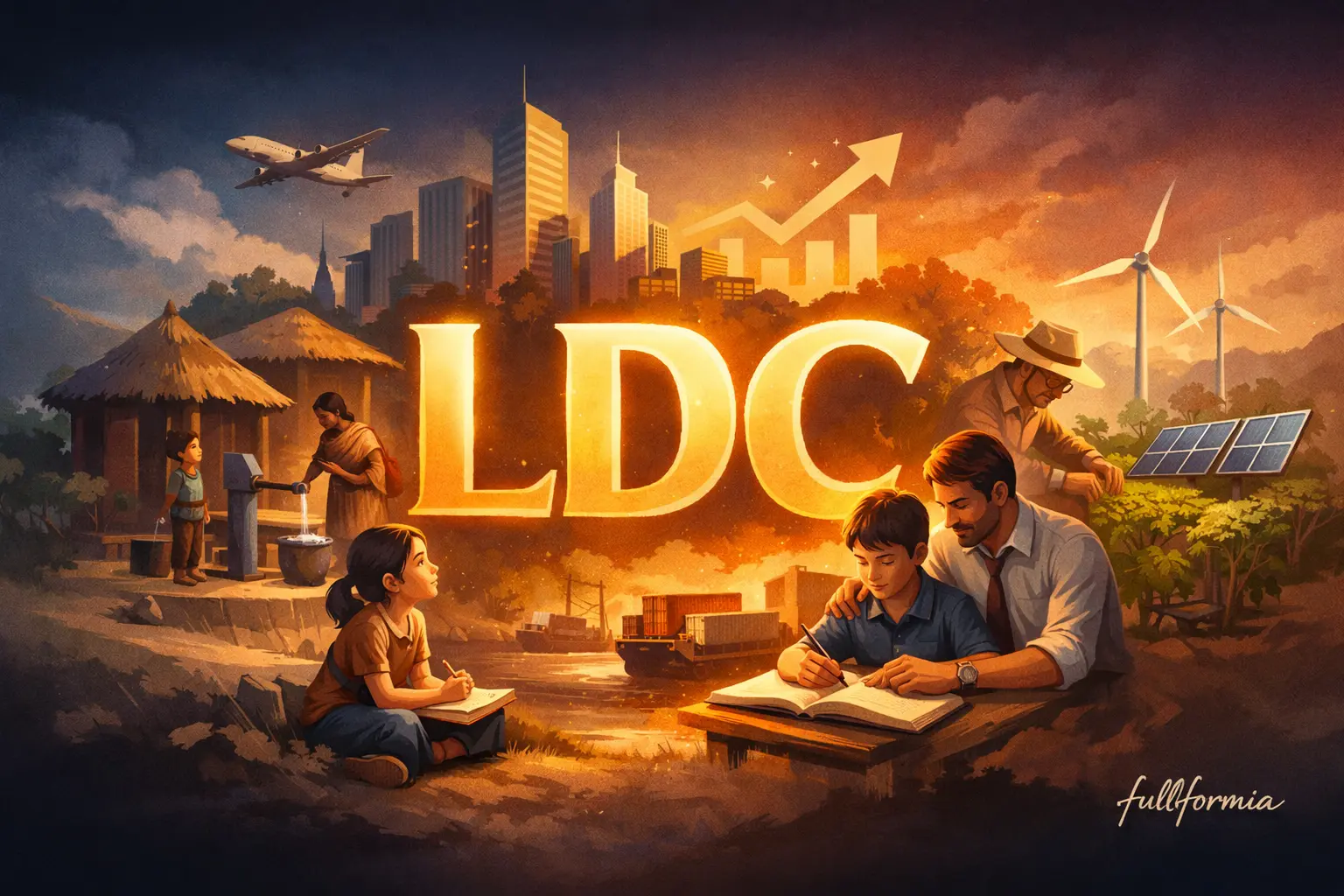
Ever wondered what "LDC" stands for when you hear it in world news or development reports? This is one of those abbreviations that pops up often, especially in discussions about global economics and social progress. Knowing the full form of LDC helps you understand development issues worldwide.
In this post, you’ll find out exactly what LDC means, its full form, why it matters, and the things people get wrong or confused about it. Perfect for beginners or anyone curious about global development terms.
What Is the Full Form of ldc full form?
LDC stands for Least Developed Countries.
This term is commonly used when talking about countries facing extreme challenges in development, economy, and social wellbeing.
Meaning and Simple Explanation
Least Developed Countries (LDCs) are a group recognized by the United Nations as nations with the lowest socio-economic development. Such countries usually have weak infrastructure, low income per person, and poor access to health care and education.
Example: Countries like Chad, Afghanistan, and Haiti are examples of LDCs. They often rely on international aid for basic needs and development projects.
Quick Overview
- Full Form: Least Developed Countries
- Category: Development / Economics
- Who uses it: United Nations, World Bank, governments, NGOs
- Alternate terms: Underdeveloped countries, low-income countries
- Number of countries: Over 40 currently, according to the UN
- Main features: Low income, weak human assets, high vulnerability
- Purpose: To identify nations needing special support
- Where used: Global reports, economic discussions, foreign aid policies
- Evaluated by: United Nations Committee for Development Policy
Why People Search This Term
- To understand what makes a country “least developed.”
- For academic research or school projects.
- To know which nations qualify for international aid.
- To learn about global development programs.
- To clear up confusion with similar terms like developing or low-income countries.
Key Details
How Does the UN Define an LDC?
The UN uses criteria like low gross national income (GNI), poor human resources (education, health), and high vulnerability to economic and environmental shocks.
Why Are Some Countries LDCs?
LDCs often struggle with historic disadvantages, weak industries, unstable governments, and challenges like poverty, frequent disasters, or conflict.
Who Decides if a Country Is an LDC?
The United Nations Committee for Development Policy (CDP) reviews and updates the LDC list every three years.
Common Mistakes
- Confusing LDC with LCD (Liquid Crystal Display).
- Thinking all poor countries are LDCs (not all qualify officially).
- Using “underdeveloped” as an exact synonym (LDC is a specific UN category).
- Believing the LDC list never changes (countries can “graduate” from LDC status).
- Assuming LDC means no progress at all.
- Mixing up LDC with terms like “developing” or “emerging markets.”
- Thinking only geography (like being in Africa) decides LDC status.
FAQs
What does LDC stand for?
LDC stands for Least Developed Countries.
Who identifies LDCs?
The United Nations Committee for Development Policy determines which countries are LDCs based on strict criteria.
How many LDCs are there?
There are currently more than 40 countries listed as LDCs globally.
Can countries stop being LDCs?
Yes, if they improve their economies and meet certain standards, countries can “graduate” from LDC status.
Is “LDC” the same as “developing country”?
No, “LDC” is a specific subcategory defined by the UN, while “developing country” is a broader, informal term.
What support do LDCs get?
LDCs receive priority for international aid, trade benefits, and technical assistance.
Where can I learn more about other full forms?
You can explore more examples at full forms category pages online.
Final Words
Understanding the term LDC (Least Developed Countries) is useful if you care about global development, aid, or economic issues. Remember, it’s a specific group with its own definition and importance in world affairs.
You May Also Like: ldc countries, underdeveloped countries, full forms
