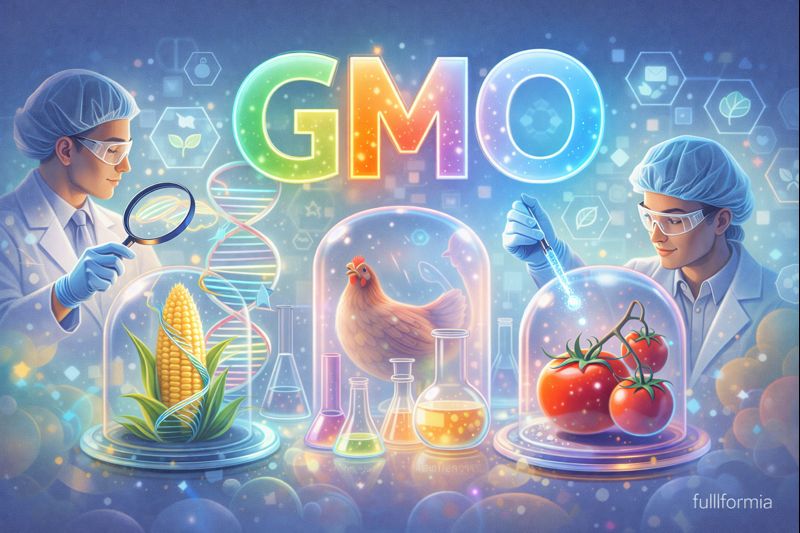
GMO is a term you might see on news headlines, food labels (regulated by bodies like FDA), or even in health debates. But what does GMO really mean, and why is it important to know? If you’ve ever wondered about GMO full form, its meaning, or why people talk about it so much, you’re in the right place.
This post will quickly break down the full form, simple meaning, key facts, and answer beginners’ common questions about GMOs—all in clear, easy language.
What Is the Full Form of GMO full form?
The full form of GMO is Genetically Modified Organism.
“Genetically Modified Organism” describes any living thing—plant, animal, or microorganism—that has had its DNA changed or edited using modern science.
Meaning and Simple Explanation
The term GMO simply means an organism whose genetic material has been altered in a laboratory. Scientists use special techniques to add, remove, or tweak specific genes. This is often done to give the organism new abilities—like resisting pests or growing faster.
Real-life example: Many soybeans grown in the US are GMOs. They’re modified to survive certain herbicides, making them easier for farmers to grow and protect from weeds.
Quick Overview
- Full Form: Genetically Modified Organism
- Category: Food, agriculture, biology
- Where Used: Crops, some processed foods (often containing additives like MSG), research, even medicine
- Purpose: Improve yield, resist pests, enhance nutrition
- Common Products: Corn, soybeans, cotton, canola
- Controversies: Health, environment, labeling debates
- Labeling: Many countries require GMO info on food labels
- Regulation: Strictly controlled in many regions
- Related Terms: Bioengineered, transgenic
Why People Search This Term
- To know what GMO stands for
- Curiosity after seeing “GMO-free” or “contains GMOs” on food packaging
- Health, allergy, or ethical concerns about GMO foods
- School projects or science homework
- Interest in food safety and farming
Key Details
How Are GMOs Made?
GMOs are created by transferring specific genes from one organism to another, using advanced lab techniques commonly studied in fields related to biotechnology.
Are All Foods GMOs?
No, only certain foods are genetically modified. Many fruits and vegetables remain non-GMO.
Are GMOs Safe?
Most scientific organizations agree that GMOs currently approved for sale are safe to eat, but some people prefer to avoid them for personal reasons.
Common Mistakes
- Thinking all modern crops are GMOs
- Confusing crossbreeding with genetic modification
- Believing “organic” always means non-GMO
- Assuming GMOs are only in plants
- Not checking food labels for GMO info
- Believing GMOs are always harmful
- Mixing up GMOs with processed foods in general
FAQs
What does GMO stand for?
GMO stands for Genetically Modified Organism.
Are GMOs only used in food?
No, GMOs are also used in research, medicine (like insulin), and agriculture.
Are GMOs legal everywhere?
GMOs are regulated and legal in many countries, but banned or limited in others.
Can eating GMOs harm you?
Current research shows approved GMOs are safe to eat for most people, but opinions vary.
Is organic food always GMO-free?
Certified organic products are typically non-GMO, but always check labels for confirmation.
Why are GMOs created?
They’re made to improve crop yield, pest resistance, reduce costs, or add nutrients.
Final Words
In summary, “GMO” means Genetically Modified Organism—a big topic in food and farming today. Now you know the full form, basic facts, common uses, and why it’s important to many people. Whether you spot the term in the news or on your next grocery run, you’ll understand exactly what it means.
