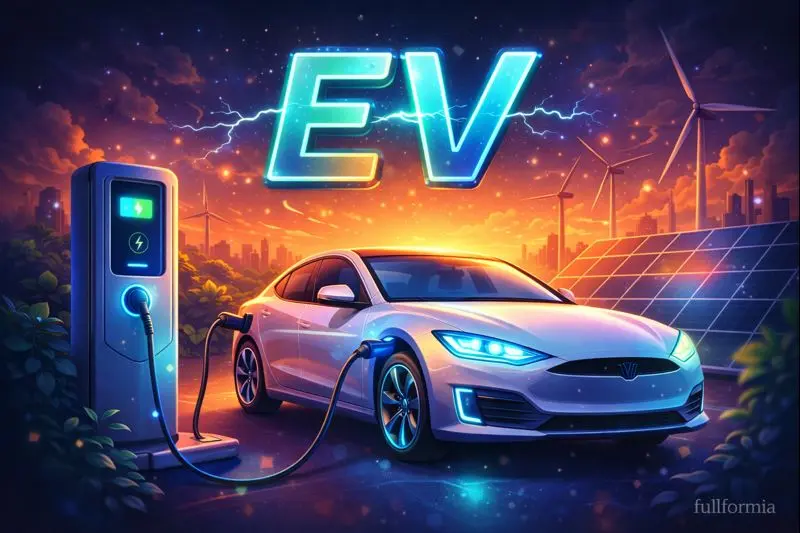
Heard people talking about EV and wondering what it actually means? You’re not alone. With electric cars, scooters, and buses making headlines every day, searches for EV full form have increased rapidly. This guide explains the meaning in simple terms, along with uses, benefits, and why EVs matter today.
By the end of this article, you’ll clearly understand the full form of EV, its Hindi meaning, and how electric vehicles are changing modern transportation.
What Is the Full Form of EV?
The full form of EV is Electric Vehicle.
An electric vehicle runs on electricity instead of traditional fuels like petrol or diesel, using rechargeable batteries as its main power source.
Meaning and Simple Explanation
An electric vehicle is any vehicle—car, bike, bus, or scooter—that uses electricity for movement. Instead of a fuel engine, EVs rely on electric motors powered by batteries.
For example, popular electric cars use battery power similar to how your phone uses a battery. You simply plug the vehicle into a charger, store energy, and drive using electricity. This innovation is closely connected with advancements in technology and sustainable energy.
Hindi Meaning (EV Ka Full Form)
EV ka full form Electric Vehicle hota hai.
Hindi mein electric vehicle ka matlab hota hai “bijli se chalne wala vaahan”. Yeh vaahan petrol ya diesel ke bajay battery aur electric motor se chalta hai.
Quick Overview
- Full Form: Electric Vehicle
- Category: Technology & automobiles
- Power Source: Rechargeable batteries
- Vehicle Types: Cars, scooters, bikes, buses, trucks
- Emissions: Zero tailpipe emissions
- Maintenance: Lower than fuel vehicles
- Trending In: Green energy, smart cities, urban transport
Why People Search “EV Full Form”
- EVs are frequently mentioned in news and government policies
- Car and bike buyers want fuel-free alternatives
- Students need the term for exams and projects
- Rising interest in eco-friendly transport
- Comparison between EVs and traditional vehicles
Key Details
Types of Electric Vehicles
There are fully electric vehicles (battery-only) and hybrid vehicles that combine fuel engines with electric motors. Fully electric models are the most popular choice for zero-emission driving.
Charging Methods
EVs can be charged using home wall sockets, dedicated charging stations, or fast chargers. Charging technology is evolving rapidly with support from AI and smart energy systems.
Environmental Benefits
Electric vehicles help reduce air pollution and noise levels in cities. They also support sustainability goals by lowering dependence on fossil fuels.
Common Mistakes About EVs
- Thinking EV refers only to cars
- Assuming EVs still use petrol or diesel
- Believing all EVs are extremely expensive
- Confusing hybrid vehicles with full EVs
- Ignoring differences in charging infrastructure
- Assuming charging always takes many hours
FAQs
What does EV stand for?
EV stands for Electric Vehicle.
Are EVs only cars?
No, EVs include scooters, bikes, buses, trucks, and even trains.
How is an EV charged?
EVs are charged by plugging them into an electrical outlet or charging station.
Do electric vehicles produce pollution?
EVs produce zero exhaust emissions while driving, making them cleaner than fuel vehicles.
Are EVs expensive to maintain?
No, EVs usually have lower maintenance costs because they have fewer moving parts.
Final Words
EV stands for Electric Vehicle, a modern solution for cleaner and smarter transportation. As fuel prices rise and environmental awareness grows, EVs are becoming the future of mobility. Understanding the EV full form and meaning helps you stay informed in today’s rapidly changing tech-driven world.
