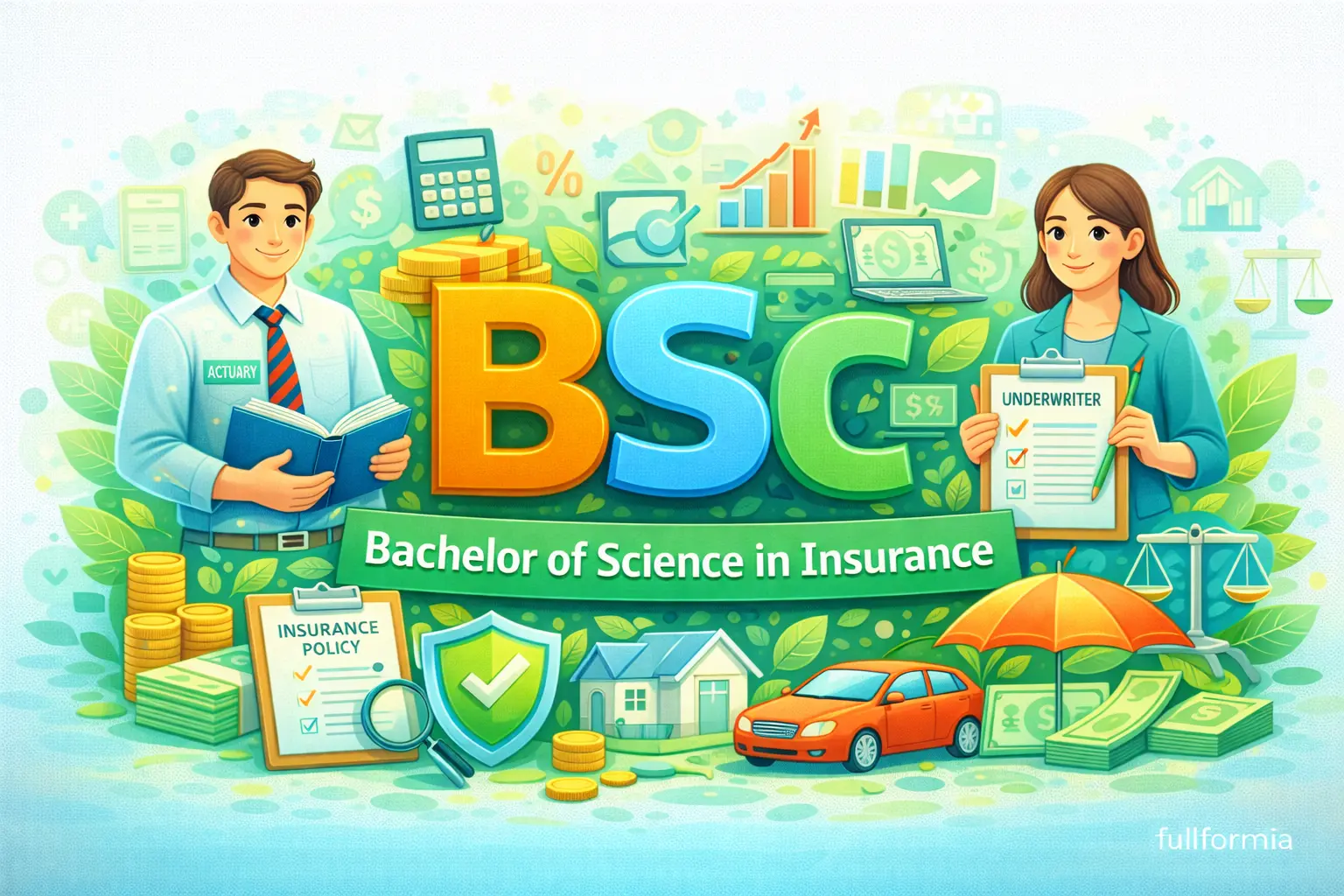
BSc is a common academic abbreviation, but in the context of insurance, its meaning can be confusing for many students and job-seekers. Understanding what BSc stands for, its relevance in the insurance field, and how it differs from other management tools is important for beginners exploring career options. education
- Get a clear answer to what BSc means in insurance education.
- See quick differences between BSc and other strategic management terms.
- Learn about its applications and common confusions in the insurance field.
BSC Full Form and Meaning
The full form of BSC is Bachelor of Science.
In insurance education, it typically refers to a bachelor’s degree course focused on insurance studies or allied subjects.
- Bachelor of Science (Education): A 3-year undergraduate degree in fields like Insurance, Mathematics, Actuarial Science, or Business.
- Balanced Scorecard (Strategic Management): A framework for business performance measurement, sometimes discussed in insurance company management courses.
Meaning and Simple Explanation
BSc in insurance means an undergraduate degree that teaches core topics like risk management, insurance principles, underwriting, and regulations. The course blends theory with practical skills needed for jobs in the insurance sector.
For example, after finishing a BSc in Insurance, a student can apply for roles such as insurance analyst or claims specialist at banks or insurance firms.
Hindi Meaning (हिंदी में)
BSc का मतलब है "बैचलर ऑफ साइंस", जो बीमा (insurance) जैसे विषय में स्नातक डिग्री है।
- यह कोर्स पूरे 3 साल का होता है।
- इसमें बीमा, जोखिम प्रबंधन और संबंधित विषय पढ़ाए जाते हैं।
- बीएससी इन इंश्योरेंस करने के बाद, छात्र बीमा कंपनियों में नौकरी पा सकते हैं।
Short Overview
- BSc stands for Bachelor of Science.
- Popular in insurance, actuarial, and risk management fields.
- Usually a 3-year degree after 12th grade (India and many countries).
- Covers insurance products, risk, law, and financial mathematics.
- Balanced Scorecard is unrelated to the degree but is used in insurance management.
- BSc graduates can work in claims, underwriting, or sales roles.
- Not the same as a balance score card or balanced scorecard.
Common Confusion
- BSc vs Balanced Scorecard: BSc is a degree; balanced scorecard is a management tool for strategy.
- Balance Score Card: Many think this term means a finance or insurance course, but it's actually a business framework.
- BSc Course Focus: The degree covers academic topics; it does not teach balance score card frameworks in depth.
- Different Specializations: BSc can be in insurance, finance, or mathematics—verify your chosen stream.
Where Used
- Colleges and universities offering insurance specialization.
- Job postings for insurance analyst or underwriter roles.
- Resume and degree listings of professionals in the insurance industry.
FAQs
What is the full form of BSc in insurance?
The full form is Bachelor of Science, which refers to an undergraduate degree focused on insurance topics.
Is BSc the same as a balanced scorecard?
No, BSc is an academic degree. A balanced scorecard is a business management framework used to track organizational performance.
Can a BSc in insurance graduate work in banking?
Yes, many banks hire BSc graduates for roles related to insurance products, risk assessment, and customer advisory.
Why do people confuse BSc with balance score card?
Both acronyms are used in business and insurance contexts, but they mean very different things—one is a degree, the other a management tool.
What subjects are taught in a BSc insurance course?
Topics may include insurance law, risk management, underwriting, claims, and financial mathematics.
Does a BSc in insurance include training on balanced scorecard?
Generally no, though some advanced insurance courses may introduce concepts from balanced scorecard in management modules.
Is BSc in insurance a good career choice?
If you are interested in risk, finance, and insurance sectors, a BSc can open up various job opportunities in growing industries.
Wrap Up
BSc in insurance is mainly an undergraduate degree for those interested in building a career in insurance and risk professions. It should not be confused with the balanced scorecard, which is a business management framework.
